


Flying theater maintenance planning starts before the attraction opens. The venue needs to know how service personnel will reach the equipment, when planned work can take place, and what information the supplier needs when support is requested. These decisions affect the layout, the operating schedule and the ongoing budget.
This guide covers preparing that plan. Inspection methods, service intervals and return-to-operation decisions must follow the documentation for the selected equipment and the responsibilities assigned to qualified personnel.
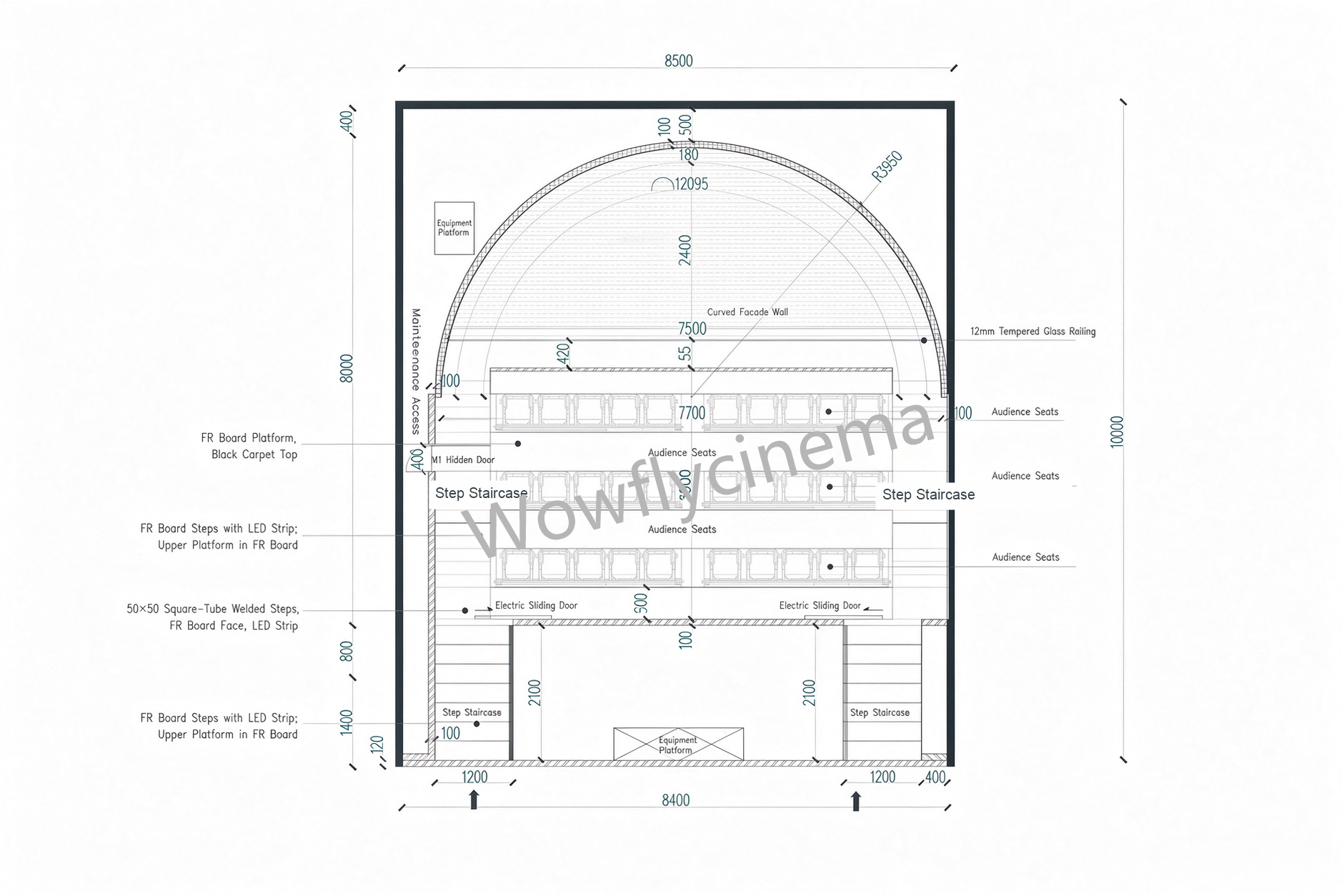
1. Review maintenance access on the proposed layout
A guest route and a service route serve different purposes. A layout that works during boarding may still leave equipment difficult to reach once partitions, themed finishes or storage are added.
Ask the supplier to mark required service areas and access points on the configuration-specific drawings. Then discuss three practical questions:
- How would a replacement component enter and leave the room?
- Where will tools and spare parts be stored?
- Which spaces must stay clear during operation?
Keep these requirements visible when the venue team develops the interior design. It is much cheaper to move a wall on a drawing than after the theming is installed.
WowflyCinema’s Flying Ride Theater overview notes that the installation area is planned around equipment, boarding access and maintenance. Confirm the detailed arrangement for your selected system rather than applying a generic clearance figure.
2. Build service windows into the operating calendar
Request the maintenance schedule for the proposed equipment and identify the responsible party for each task. Separate operator-level activities from work assigned to qualified service personnel. Include documentation, training and escalation contacts in the handover plan.
For business planning, calculate available guest-operation hours only after reserving the agreed service windows. For example, if a venue allocates 60 hours per week to an attraction and reserves 3 of those hours for planned service, 57 hours remain before other interruptions. These are illustrative planning inputs, not recommended service hours or a manufacturer specification.
The time required for actual work depends on the selected system and its service requirements. Confirm the schedule before using it in a capacity or revenue model.
3. Define spare-parts and support arrangements
A useful spare-parts discussion goes beyond the purchase price. Cover these points in writing:
- Local stock: Which items does the supplier recommend holding on site?
- Identification: How are parts referenced so the correct item is ordered the first time?
- Storage: What conditions apply (temperature, humidity, handling)?
- Availability and lead times: What are indicative delivery times, and how is compatibility confirmed before ordering?
Clarify support hours and time zones, remote-support arrangements, on-site service options, and the information required when opening a support request. Record warranty scope and exclusions in the agreed commercial documents. Do not assume that every replacement, shipment or site visit is included.
4. Use a simple maintenance planning register
| Planning item | Information to record |
|---|---|
| Equipment identity | Model, serial number and relevant document revision |
| Required work | Task and interval specified in the applicable manual |
| Responsibility | Assigned role and required competence |
| Service window | Planned time and expected operating impact |
| Parts | Approved reference, availability and storage requirements |
| Completion record | Work performed, findings and responsible person |
| Follow-up | Outstanding issue and next action under the approved procedure |
This register organizes information; it does not replace the manufacturer’s maintenance instructions. Establish how records are reviewed and how unresolved issues are communicated between shifts — and to the supplier.
5. Include maintenance in the operating budget
Budget planned service in separate lines: service labor, consumables, replacement parts, shipping, specialist visits and any contracted support fees. Request quotations where available and label provisional allowances clearly.
Track lost operating time separately from cash expenditure. A closed hour does not automatically equal a full hour of lost ticket sales: demand, ticket allocation and whether guests can move to a later session all matter. Use venue records when available rather than assuming every session would have sold out.
Frequently asked questions
Who performs flying theater maintenance — the operator or the supplier? Both, with a clear split. Daily checks and cleaning are typically operator tasks; inspection and repair work requiring specific competence is assigned to qualified service personnel per the manufacturer’s documentation. Confirm the split in the handover plan before opening.
How much downtime should a flying theater plan for? There is no universal figure. Reserve the service windows stated in the equipment documentation, then track actual downtime once operating. Planned windows are predictable; unplanned stoppages are managed through the spare-parts and support arrangements above.
What should we ask the supplier before signing? Model-specific maintenance documentation, recommended local spare parts, support hours and time zones, remote and on-site service options, and the warranty scope with exclusions — all in writing.
Prepare your next project discussion
For an early-stage project, share the proposed floor plan, opening schedule, location and available operating-team resources. Ask for model-specific maintenance documentation and a clear support scope alongside the equipment proposal.
If you are still comparing attraction formats, start with our guide to choosing a flying theater. To discuss your equipment and layout requirements, visit the Flying Ride Theater product page and send your project brief.